
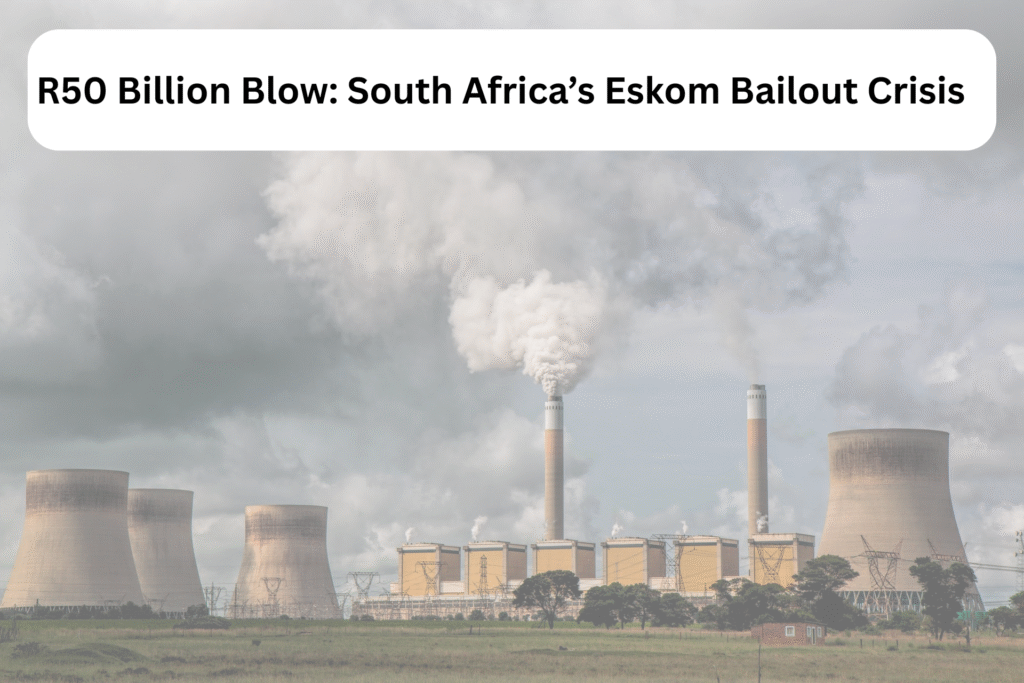
R50 Billion Kick in the Teeth for South Africa: Understanding the Economic Blow and Its Far-Reaching Implications
Eskom
South Africa has once again found itself facing a staggering financial challenge: a R50 billion setback that experts are describing as a “kick in the teeth” for an already fragile economy. While South Africa is no stranger to fiscal difficulties—ranging from power shortages and water crises to slow GDP growth and high unemployment—this latest development adds yet another layer of complexity to an already daunting economic landscape.
The phrase “R50 billion kick in the teeth” has captured public attention not only because of the massive figure involved but also because of what it symbolizes: an erosion of economic stability, investor confidence, and the hope of quick recovery from years of structural challenges. To better understand this crisis, it is essential to unpack its origins, implications, and what it might mean for South Africa’s economic future.
The Source of the R50 Billion Blow
The R50 billion financial blow stems from several interconnected factors, but the most direct trigger is weaker-than-expected revenue collection by the South African Revenue Service (SARS) and increased government expenditure obligations. Revenue shortfalls have been worsened by declining corporate profits in key sectors like mining, manufacturing, and energy, as well as slower household consumption due to high inflation and rising interest rates.
Adding fuel to the fire are increased demands on the national budget from Eskom bailouts, Transnet inefficiencies, and social welfare expansions. These drains on the fiscus have left the government in a precarious position, forcing it to borrow more while already struggling under an unsustainable debt burden.
In essence, the R50 billion shortfall represents the widening gap between what South Africa earns and what it spends—a structural imbalance that, if left unchecked, could spiral into a full-blown fiscal crisis.
How Did South Africa Get Here?
To truly grasp the severity of this financial setback, it’s important to trace the country’s economic trajectory over the last two decades.
- Loadshedding and Eskom’s Collapse
South Africa’s electricity crisis, spearheaded by Eskom’s chronic failures, has been one of the most significant drags on economic growth. Frequent power cuts have disrupted industries, increased business costs, and reduced investor confidence. Billions of rands have been poured into Eskom as bailouts, yet the utility remains structurally broken. - High Unemployment and Low Growth
South Africa consistently records one of the highest unemployment rates in the world, with youth unemployment particularly dire. The lack of sufficient job creation has depressed consumer spending and reduced tax revenue. - Corruption and State Capture
The scars of state capture continue to haunt the economy. Billions looted during years of corruption scandals have not only drained public coffers but also left institutions weakened and incapable of driving effective reforms. - Global Economic Pressures
Commodity price volatility, a slowdown in China (a key trading partner), and rising global interest rates have collectively impacted South Africa’s ability to generate export earnings and attract capital inflows.
Together, these factors created fertile ground for the kind of fiscal shock represented by the R50 billion setback.
Who Will Feel the Pain?
The effects of this financial blow are not abstract—they will be felt by households, businesses, and the government alike.
- Ordinary South Africans
Higher taxes and fewer government services are the most likely outcomes. Already, South Africans are burdened with high VAT, fuel levies, and income taxes, and additional hikes could erode disposable incomes further. - Businesses and Investors
Investor sentiment is crucial for South Africa, but a fiscal crisis makes the country a riskier destination. This can lead to reduced foreign direct investment, higher borrowing costs, and even capital flight. - The Government
Treasury may be forced to reallocate funds from critical developmental programs, such as education, healthcare, and infrastructure, to plug budget holes. This compromises long-term growth prospects in favor of short-term damage control.
What Does This Mean for the Rand and Inflation?
The South African rand is highly sensitive to fiscal news, and unsurprisingly, the R50 billion shortfall has already placed downward pressure on the currency. A weaker rand makes imports more expensive, feeding into inflation.
South African households are already struggling with the rising cost of food, transport, and electricity. A sustained depreciation of the rand could push inflation even higher, forcing the South African Reserve Bank (SARB) to maintain elevated interest rates for longer. This further squeezes both consumers and businesses.
The Bigger Picture: Debt and Credit Ratings
South Africa’s debt-to-GDP ratio has been on an upward trajectory, now hovering around 70% and projected to rise further. The R50 billion revenue shortfall will accelerate this climb, raising alarms for credit rating agencies.
Moody’s, S&P, and Fitch have all kept South Africa’s sovereign debt rating in junk status for several years, citing weak growth prospects and fiscal mismanagement. Another major revenue miss increases the likelihood of further downgrades or negative outlooks.
A lower credit rating raises the cost of borrowing for the government, trapping it in a vicious cycle where more debt is needed just to service existing obligations.
Government’s Response
The National Treasury has acknowledged the severity of the crisis and hinted at potential interventions, including:
- Spending Cuts: Reducing public sector wage growth and trimming non-essential government programs.
- Increased Borrowing: Tapping into local and international markets to finance shortfalls.
- Tax Increases: Possible hikes in VAT, personal income tax, or corporate tax.
- Public-Private Partnerships: Accelerating investment partnerships in infrastructure, energy, and logistics to ease the burden on the state.
While these measures may provide temporary relief, they are unlikely to fix the underlying structural weaknesses of the economy.
Can South Africa Recover from This Blow?
The short answer is: Yes, but only with bold reforms.
The R50 billion setback should serve as a wake-up call for policymakers. Band-aid solutions will no longer suffice. What South Africa needs is:
- Energy Reform: Ending loadshedding by fast-tracking renewable energy projects and restructuring Eskom.
- Logistics Overhaul: Fixing Transnet’s inefficiencies to unlock export potential.
- Anti-Corruption Drive: Strengthening institutions to prevent further looting of public funds.
- Labor Market Reform: Creating an environment where businesses can expand and hire more workers.
- Investor Confidence Restoration: By providing policy certainty, especially in mining, energy, and land reform.
Conclusion
The “R50 billion kick in the teeth” is more than just a headline—it is a sobering reminder of South Africa’s fragile economic position. It highlights the consequences of years of neglect, corruption, and slow reform, while also pointing to the urgent need for decisive action.
If left unaddressed, this setback could deepen the country’s economic malaise, worsening unemployment, poverty, and inequality. However, with the right reforms, South Africa can turn this crisis into an opportunity to reset its economic trajectory.
The coming months will be critical. The world is watching, South Africans are waiting, and the government must decide: Will this R50 billion blow be yet another chapter in the country’s decline, or will it be the spark that finally drives real and lasting reform?