Why Iran and the United States Are Fighting: Causes, Global Impact & Risks 2026
The ongoing U.S.–Iran conflict is the product of decades of political, ideological, and strategic tension. From the 1953 CIA-backed coup to the 1979 Islamic Revolution, nuclear disputes, and proxy wars across the Middle East, this rivalry has far-reaching implications for global security, energy markets, and regional stability.
Historical Context of U.S.–Iran Tensions
Relations soured in 1953 when the CIA helped overthrow Iran’s Prime Minister Mohammad Mossadegh, reinstating the Shah. The 1979 Islamic Revolution further deteriorated ties, with the hostage crisis leading to the severing of diplomatic relations and the start of sanctions.
Ideological and Strategic Differences
The United States promotes liberal democracy and maintains alliances with Israel and Gulf countries. Iran is a theocratic Islamic Republic opposing U.S. military presence and western influence. Tehran also supports proxy groups throughout the region. These ideological differences are at the core of periodic escalations.
Nuclear Program Disputes
Iran maintains that its nuclear program is for civilian purposes, but the U.S. and allies have feared potential weaponization. The 2015 JCPOA nuclear deal temporarily eased tensions, but the U.S. withdrawal in 2018 reignited hostilities.
Sanctions and Economic Pressure
Sanctions affect Iran’s oil exports, banking, and military sectors, causing inflation and economic hardship. Iran views sanctions as economic warfare, while the U.S. uses them as leverage to curb Tehran’s regional influence.
Proxy Conflicts in the Middle East
Iran has supported groups like Hezbollah, Shiite militias in Iraq, the Houthis in Yemen, and the Assad regime in Syria. The U.S., Israel, and Gulf allies counter these forces, leading to proxy wars and periodic escalations.
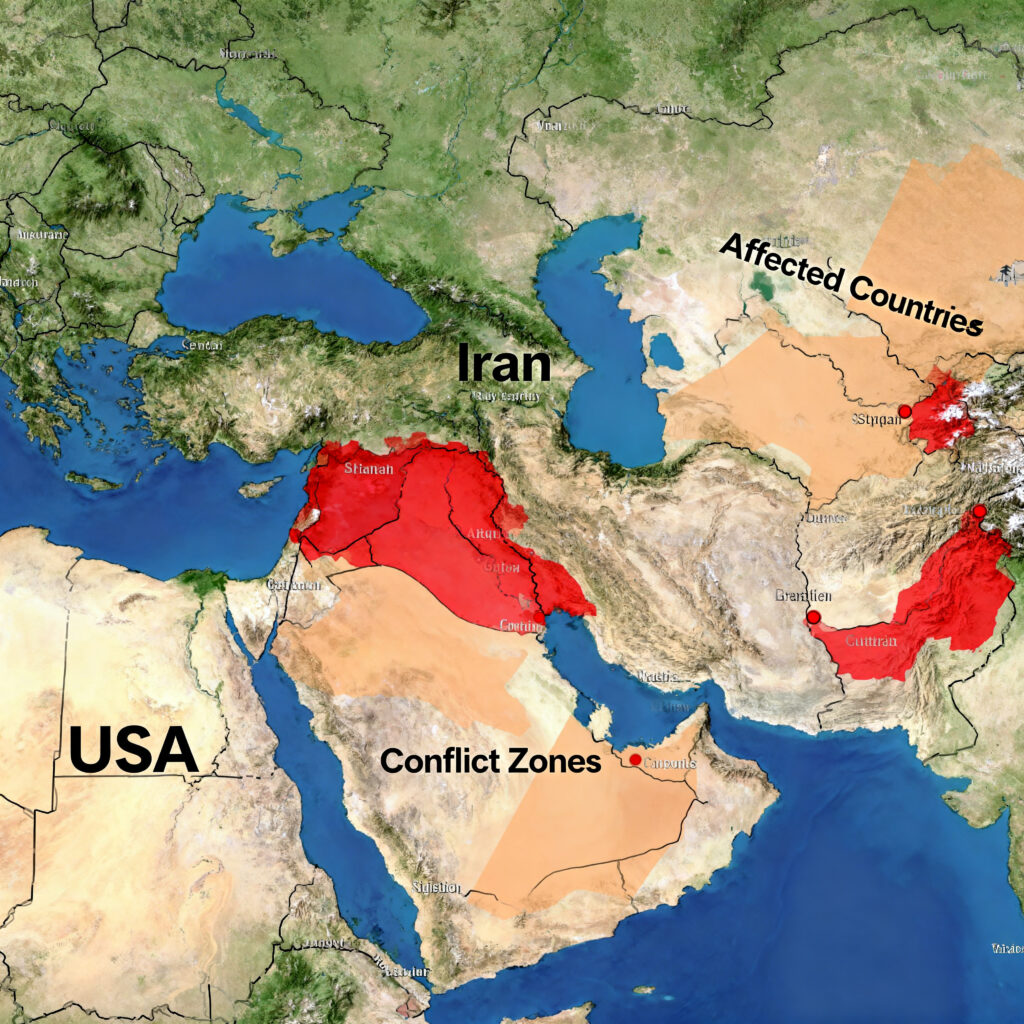
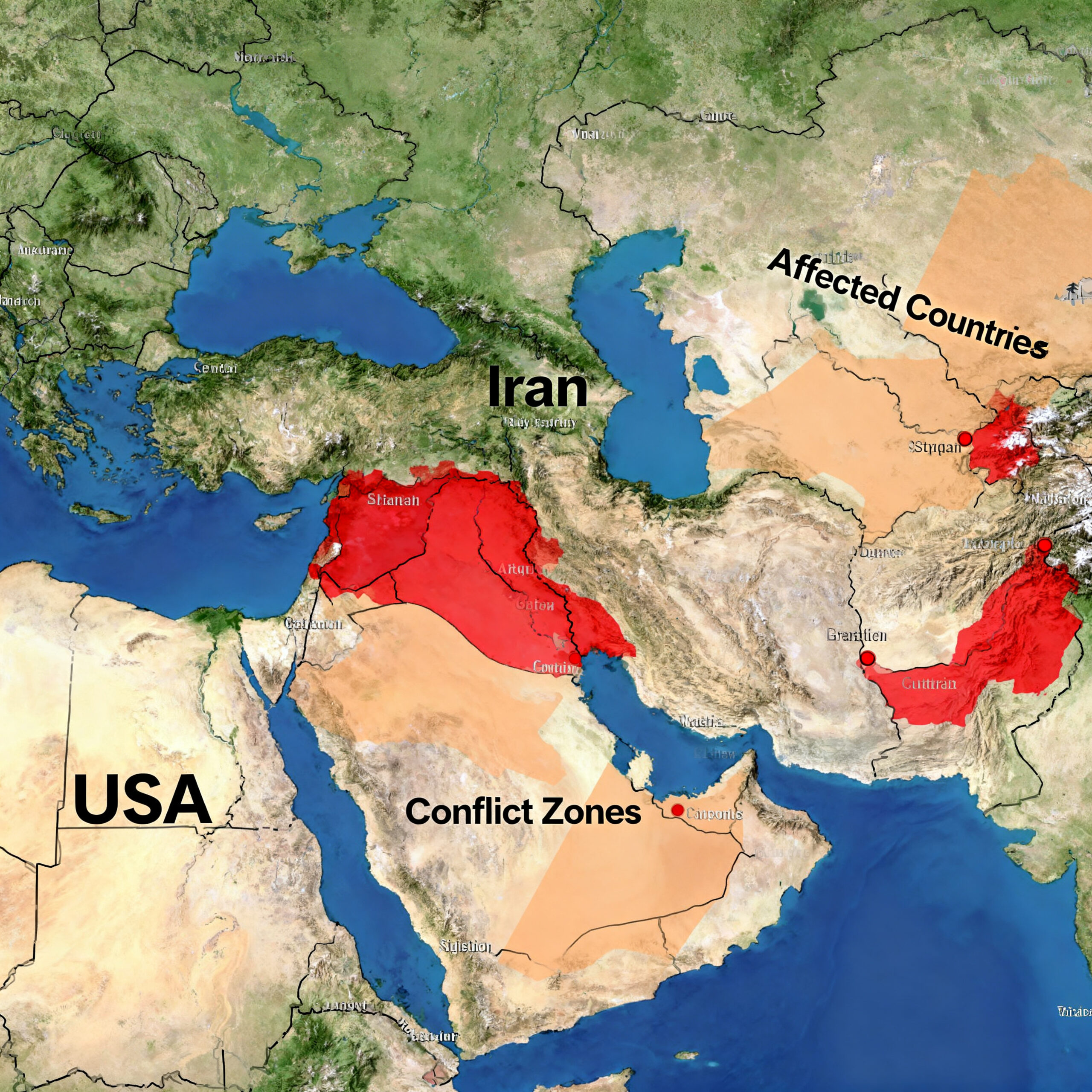
Global Impact: Which Countries Are Affected?
- United Arab Emirates & Dubai: Airport disruptions, airspace closures, and trade interruptions. Learn more about Dubai’s regional security impact.
- Gulf States: Heightened military readiness in Saudi Arabia, Qatar, Bahrain, and Oman.
- Europe & Asia: Oil markets affected due to energy security concerns.
- United States: Military deployments, political discussions, and economic consequences.
- Global Investors: Stock and commodity markets respond to geopolitical risk.
Cyber Warfare and Modern Conflicts
Both countries conduct cyber operations, targeting critical infrastructure and defense systems. Cyberattacks complement conventional military strategies, making this conflict multidimensional.
Long-Term Outlook
Direct war has been avoided, but tensions persist due to ideology, regional influence, nuclear ambitions, and proxy wars. Escalation could significantly affect global oil, trade, and international security.
Frequently Asked Questions (FAQ)
1. Why are Iran and the United States in conflict?
The conflict stems from historical grievances, ideological differences, nuclear disputes, sanctions, and proxy wars across the Middle East.
2. Which countries are most affected by the Iran-U.S. conflict?
Middle Eastern countries such as UAE, Saudi Arabia, and Iraq are directly impacted. Europe, Asia, and global markets also feel economic consequences.
3. How do sanctions affect Iran?
Sanctions target oil, banking, and military sectors, causing economic hardship and political pressure on Tehran.
4. Has there been direct military confrontation between the U.S. and Iran?
There have been strikes, drone attacks, and naval incidents, but no sustained full-scale war has occurred.
5. Can the U.S.–Iran conflict affect global oil prices?
Yes. Disruptions in the Strait of Hormuz and regional instability can cause spikes in global crude oil prices.
Conclusion
The U.S.–Iran conflict is multi-layered, involving history, ideology, geopolitics, and economics. While direct war has been avoided, global repercussions are substantial, affecting oil, trade, and international security. Understanding these tensions is critical for governments, businesses, and global investors.