What Is Foreign Accent Syndrome? Symptoms, Causes, and Treatment
Published: March 3, 2026
Foreign Accent Syndrome (FAS) is one of the rarest and most fascinating neurological conditions in the world. Imagine waking up one morning speaking in your native language — but with an accent that suddenly sounds foreign. For most people, this sounds like a movie plot. Yet for a small number of patients worldwide, it is a real-life experience.
What Exactly Is Foreign Accent Syndrome?
Foreign Accent Syndrome is a neurological speech disorder in which changes in the brain alter a person’s pronunciation, rhythm, and intonation, creating the perception that they speak with a foreign accent. It does not involve learning a new language or deliberately imitating an accent.
Fewer than 100 confirmed cases exist globally. Each case is unique, but all involve subtle alterations in speech patterns that listeners perceive as a recognizable foreign accent.
Key Features of FAS
- Altered vowel sounds
- Changes in syllable stress patterns
- Differences in pitch and tone
- Modified speech rhythm and timing
- Subtle consonant articulation changes
Even minor changes in these areas can make native speech sound dramatically different to others.
How Does Foreign Accent Syndrome Happen?
FAS usually arises after neurological disruptions. Brain areas responsible for speech, including Broca’s area, the motor cortex, basal ganglia, and cerebellum, must work together precisely. Any slight alteration can impact how speech is produced.
Common triggers include:
- Stroke – often the most reported cause
- Traumatic brain injury
- Brain lesions
- Multiple sclerosis
- Severe migraines
- Post-surgical complications affecting brain function
Even minor disruptions in these areas, sometimes undetectable in standard scans, can create the perception of a foreign accent.
FAS After Surgery: A Rare Phenomenon
While FAS is most often linked to stroke or injury, some rare cases occur following surgery. Patients may wake up speaking with an accent that was never previously part of their experience.
Medical experts suggest that subtle disruptions in blood flow or oxygen supply during anesthesia may temporarily affect speech centers. These changes can be enough to trigger the syndrome.
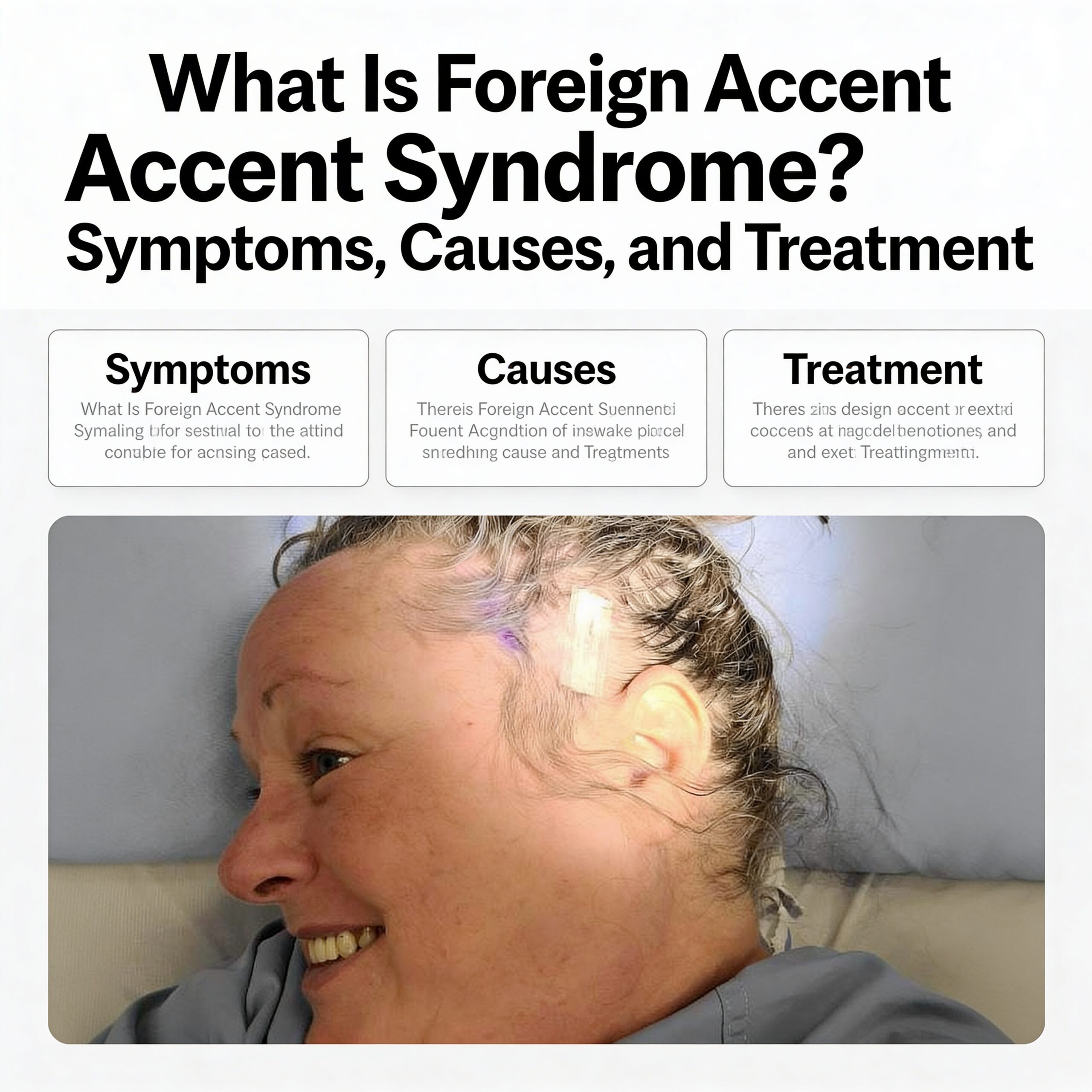
For example, a Canadian woman went into routine surgery and woke up with a Russian accent, despite never having lived in Russia. Doctors confirmed the diagnosis as FAS, highlighting the delicate nature of speech production in the brain.
Psychological vs Neurological Causes
Some cases of FAS have a psychogenic origin. Stress, trauma, or psychological conditions can mimic neurological symptoms without structural brain damage. These cases are extremely rare, and thorough neurological evaluation is necessary to rule out structural causes.
Most cases, however, have identifiable neurological triggers visible on imaging, even if minor.
Symptoms of Foreign Accent Syndrome
The hallmark symptom is the sudden change in speech, perceived by others as a foreign accent. Other accompanying signs may include:
- Difficulty pronouncing familiar words
- Changes in speech rhythm and stress
- Frustration or anxiety while speaking
- Social discomfort due to misidentification of nationality
Patients are often aware of the change but cannot control it voluntarily.
Diagnosis and Treatment
Diagnosing FAS requires careful medical evaluation:
- Neurological exams to assess brain function
- Imaging scans (MRI or CT) to detect lesions or stroke
- Speech-language assessments to analyze pronunciation and rhythm
- Psychological evaluation to rule out psychogenic cases
Treatment focuses on speech therapy and neurological rehabilitation. Therapy can help patients regain original speech patterns or adapt to the new accent.
Famous and Documented Cases
Several unusual FAS cases have been documented worldwide:
- A British woman who developed a Chinese-sounding accent after a stroke
- An American woman who spoke with a British accent following brain trauma
- A European patient who acquired a Scandinavian-sounding accent after injury
- The Canadian woman who woke up speaking Russian after surgery
Each case highlights how fragile speech production can be when neurological systems are disrupted.
Living With Foreign Accent Syndrome
FAS can have a profound emotional and social impact. Patients may experience:
- Identity confusion
- Social anxiety and embarrassment
- Isolation or misjudgment from peers
- Psychological distress
Speech is deeply tied to identity. Even subtle changes can be life-altering.
Related Articles
- She Went Into Surgery Canadian… She Woke Up Russian
- Can Surgery Change Your Accent?
- Rare Neurological Disorders That Sound Fake But Are Real
- How Speech Therapy Rewires the Brain
Frequently Asked Questions
What is Foreign Accent Syndrome?
Foreign Accent Syndrome is a rare neurological disorder that causes subtle changes in speech patterns, creating the perception of a foreign accent.
Can surgery cause FAS?
Rarely, surgical complications affecting brain function may trigger FAS.
Is it permanent?
Recovery varies. Some patients regain their original accent; others experience long-term changes.
How rare is FAS?
Fewer than 100 cases are confirmed worldwide.