
Black Discoloration Between the Thighs: 7 Common Causes, Treatments and When to See a Doctor
Black discoloration between thighs is a very common concern affecting people of different ages and skin tones. Many individuals notice dark patches appearing gradually on the inner thigh area and may feel embarrassed or worried about what it means.
In most cases, this type of pigmentation is harmless and results from friction, sweating, shaving irritation or post-inflammatory skin changes. However, sometimes it may be linked to infections, hormonal imbalance or metabolic conditions.
Understanding the possible causes of black discoloration between thighs is important for choosing the correct treatment and preventing further skin irritation.
What Is Black Discoloration Between the Thighs?
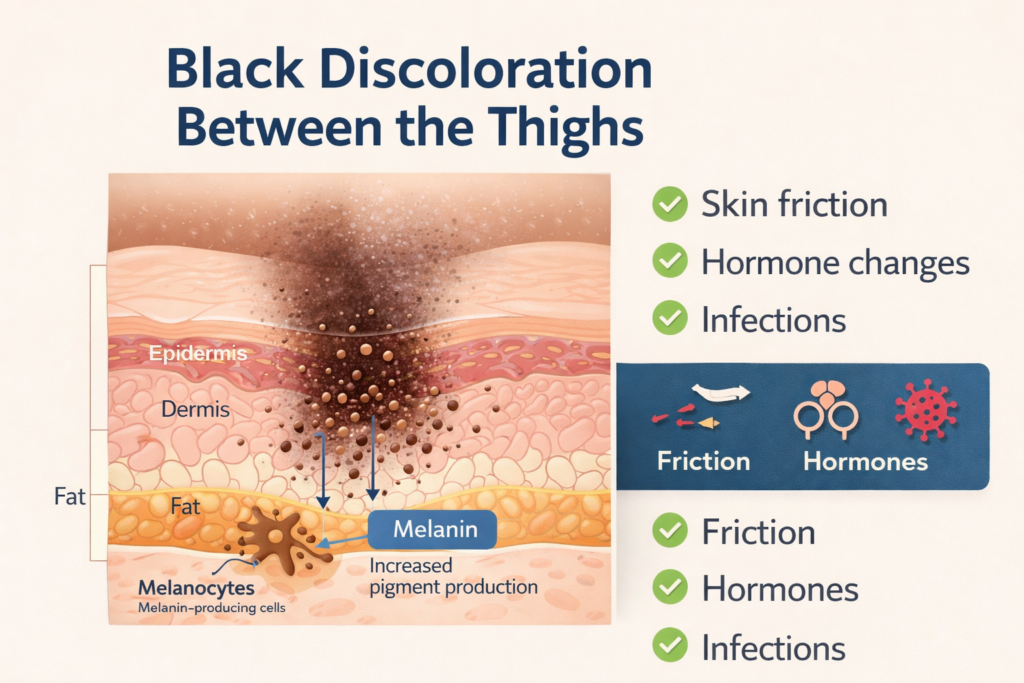
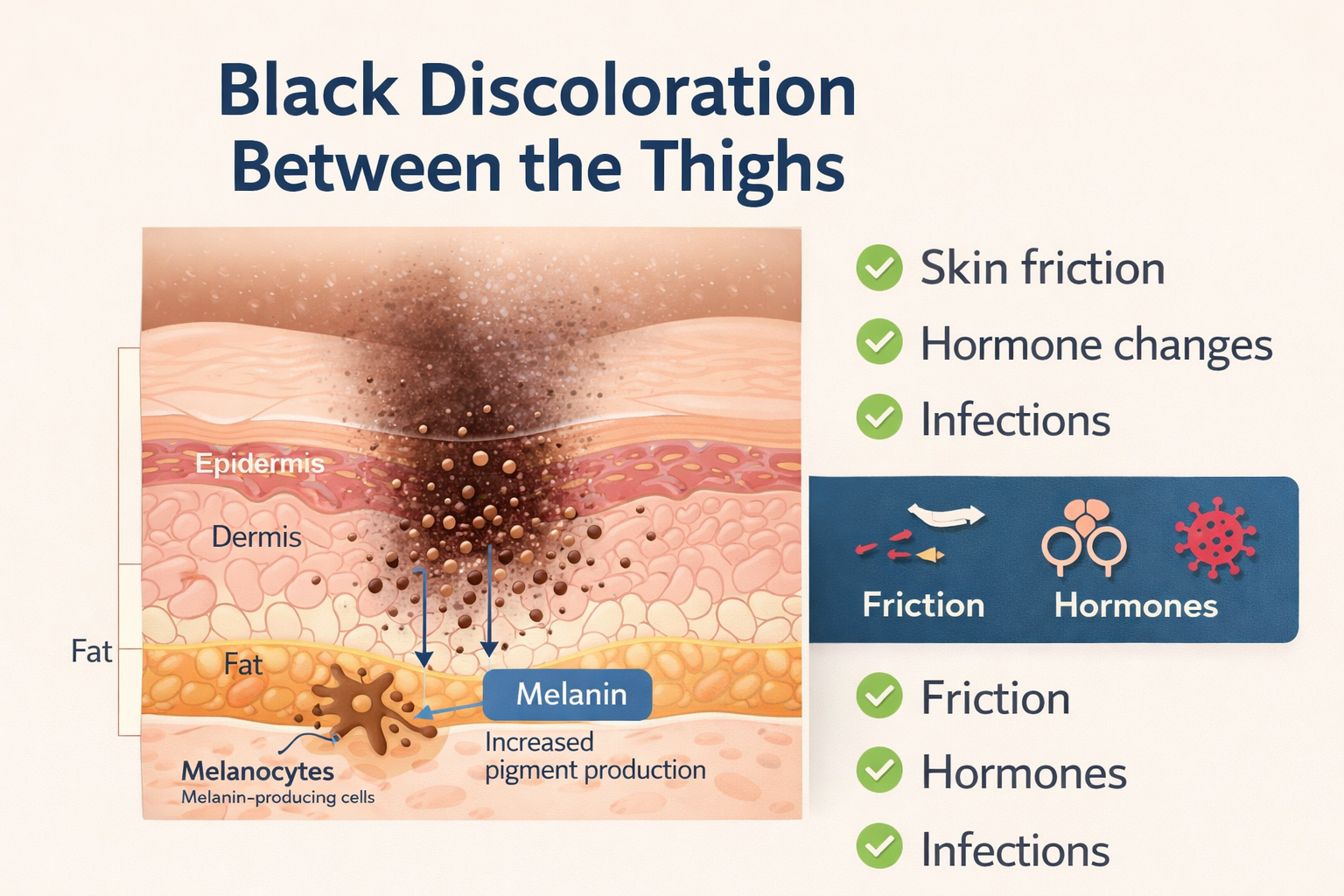
Black discoloration between thighs usually refers to hyperpigmentation. This occurs when the skin produces excess melanin in a specific area after irritation or inflammation. The inner thigh region is especially prone to this because it is a warm, moist environment where skin surfaces frequently rub against each other.
The darkening may appear as brown, grey or almost black patches depending on a person’s natural skin tone. For some people the skin may also feel thicker or slightly rough.
1. Friction and Skin Chafing
One of the most common causes of black discoloration between thighs is friction. When the thighs repeatedly rub against each other while walking, exercising or wearing tight clothing, the skin becomes irritated. Over time the body responds by producing more pigment in that area.
This condition is especially common in warm climates and among people who sweat frequently. Tight jeans, synthetic fabrics and intense physical activity can all contribute to repeated friction.
2. Post-Inflammatory Hyperpigmentation
Another common cause is post-inflammatory hyperpigmentation. This occurs when the skin becomes darker after a rash, injury or irritation heals. Shaving irritation, ingrown hairs and allergic reactions to cosmetic products can trigger this type of pigmentation.
The discoloration may remain long after the original irritation disappears. In many cases it fades gradually over time, although it can take several months.
3. Fungal Infections
Fungal infections of the groin area, often known as jock itch, may also lead to black discoloration between thighs. The infection thrives in warm, damp areas of the body and may initially appear as a red or itchy rash.
After the infection begins to heal, the skin may remain darker than the surrounding area. Symptoms often include itching, burning and flaking skin.
4. Acanthosis Nigricans
In some cases, black discoloration between thighs may be linked to a skin condition called acanthosis nigricans. This condition causes thick, velvety dark patches in body folds such as the neck, armpits and inner thighs.
Acanthosis nigricans is often associated with insulin resistance and may be an early warning sign of type 2 diabetes. Individuals who notice thick, dark patches appearing suddenly should consider seeking medical advice.
5. Shaving and Hair Removal Irritation
Frequent shaving can irritate the delicate skin of the inner thigh. Razor burn, small cuts and ingrown hairs can all cause inflammation that eventually leads to darker skin.
Using clean razors, shaving cream and moisturizing the skin afterwards may help reduce irritation.
6. Excess Moisture and Sweating
Sweat accumulation between the thighs creates a moist environment where bacteria and fungi can grow easily. When combined with friction, this can irritate the skin and eventually cause pigmentation changes.
Wearing breathable clothing and maintaining proper hygiene can help reduce this risk.
7. Hormonal Changes
Hormonal fluctuations may also affect skin pigmentation. Conditions that influence insulin levels or hormone balance can sometimes lead to dark patches appearing in body folds.
Frequently Asked Questions
Is black discoloration between thighs normal?
Yes. Many people experience dark inner thighs due to friction or irritation. It is usually harmless.
Can dark inner thighs be treated?
Treatment depends on the cause. Reducing friction, treating infections and using dermatologist-recommended creams may help improve the appearance.
When should I see a doctor?
If the skin becomes thick, itchy, painful or spreads quickly, it is best to seek medical advice.
Conclusion
Black discoloration between thighs is a common skin concern that may result from friction, infections, hormonal imbalance or skin irritation. While it is usually harmless, understanding the cause is important for choosing the correct treatment.
Maintaining good hygiene, reducing friction and addressing underlying health conditions can significantly improve skin health and prevent further discoloration.
Black Discoloration Between the Thighs: 7 Common Causes, Treatments and When to See a Doctor
Black discoloration between thighs is a very common skin concern affecting people across different age groups and skin tones. Many individuals notice dark patches appearing gradually on the inner thigh area and may feel embarrassed or worried about what it means.
In most cases, this condition is harmless and occurs due to friction, sweating or skin irritation. However, in some situations it may be linked to infections or metabolic conditions. Understanding the causes can help determine whether the issue is cosmetic or something that requires medical attention.
If you are interested in more public health topics, visit the Health section on ZA Reports
What Is Black Discoloration Between the Thighs?
Black discoloration between thighs usually refers to a condition called hyperpigmentation, which occurs when the skin produces more melanin in a specific area. Melanin is the pigment responsible for skin colour.
According to dermatology experts, repeated irritation, inflammation or friction can stimulate pigment cells to produce more melanin, leading to darker patches of skin. You can learn more about hyperpigmentation from trusted medical sources such as the Mayo Clinic guide on hyperpigmentation .
1. Friction and Skin Chafing
One of the most common causes of black discoloration between thighs is friction. When the thighs rub together repeatedly during walking, exercising or wearing tight clothing, the skin becomes irritated.
Over time, the body responds to the irritation by producing extra pigment, which leads to dark patches on the inner thigh area. This condition is particularly common in hot climates where sweating increases friction.
Wearing breathable fabrics such as cotton underwear and avoiding extremely tight clothing can help reduce skin chafing.
2. Post-Inflammatory Hyperpigmentation
Another common cause of dark inner thighs is post-inflammatory hyperpigmentation. This occurs when the skin becomes darker after healing from irritation or injury.
Shaving irritation, ingrown hairs, allergic reactions or skin rashes may all lead to this type of pigmentation.
For additional information on skin conditions related to pigmentation, you can also visit the World Health Organization health fact sheets .
3. Fungal Infections
Fungal infections such as jock itch can also cause dark patches between the thighs. This infection thrives in warm and moist areas of the body and commonly affects athletes or individuals who sweat heavily.
Symptoms may include itching, burning, redness and flaky skin. As the infection heals, the skin may remain darker for some time.
The Centers for Disease Control and Prevention (CDC) explains that fungal infections in body folds are common and can usually be treated with antifungal medication.
4. Acanthosis Nigricans
In some cases, black discoloration between thighs may be associated with a skin condition known as acanthosis nigricans. This condition causes thick, dark and velvety skin patches in body folds such as the neck, armpits and groin.
Medical research suggests that acanthosis nigricans may be linked to insulin resistance and an increased risk of type 2 diabetes.
You can read more about this condition on the UK National Health Service (NHS) medical guide .
5. Shaving and Hair Removal Irritation
Frequent shaving or waxing can irritate the sensitive skin of the inner thighs. Razor burn, ingrown hairs and small cuts may trigger inflammation, which eventually causes pigmentation changes.
Using clean razors, shaving creams and moisturizers can help protect the skin barrier and reduce irritation.
6. Excess Moisture and Sweating
Sweat accumulation between the thighs creates a warm and humid environment where bacteria and fungi can grow easily. This may lead to skin irritation, rashes and pigmentation changes.
Maintaining good hygiene and wearing breathable clothing can help keep the area dry and prevent infections.
7. Hormonal Changes
Hormonal imbalances may also influence skin pigmentation. Certain endocrine conditions can cause darker patches to appear in body folds such as the groin or underarms.
If the dark patches appear suddenly or spread quickly, consulting a healthcare professional is recommended.
Frequently Asked Questions
Is black discoloration between thighs normal?
Yes, it is very common and often caused by friction or skin irritation.
Can dark inner thighs be treated?
Treatment depends on the cause. Reducing friction, improving hygiene and treating infections may help improve the appearance of the skin.
When should I see a doctor?
If the skin becomes thick, itchy, painful or spreads rapidly, medical advice should be sought.
Conclusion
Black discoloration between thighs is a common skin concern that can occur due to friction, infections, hormonal changes or metabolic conditions. While the condition is usually harmless, identifying the underlying cause is essential for choosing the correct treatment.
For more health awareness articles, visit ZA Reports for the latest news and public health information.