
Melasma: Causes, Symptoms, Treatments and Prevention of This Common Skin Condition
Focus Keyword: melasma skin condition
Melasma is a common skin condition that causes dark patches or discoloration on the skin, usually appearing on the face. It affects millions of people worldwide and is particularly common among women and individuals with darker skin tones. Although melasma is not dangerous, it can affect self-confidence and often becomes a long-term cosmetic concern for many people.
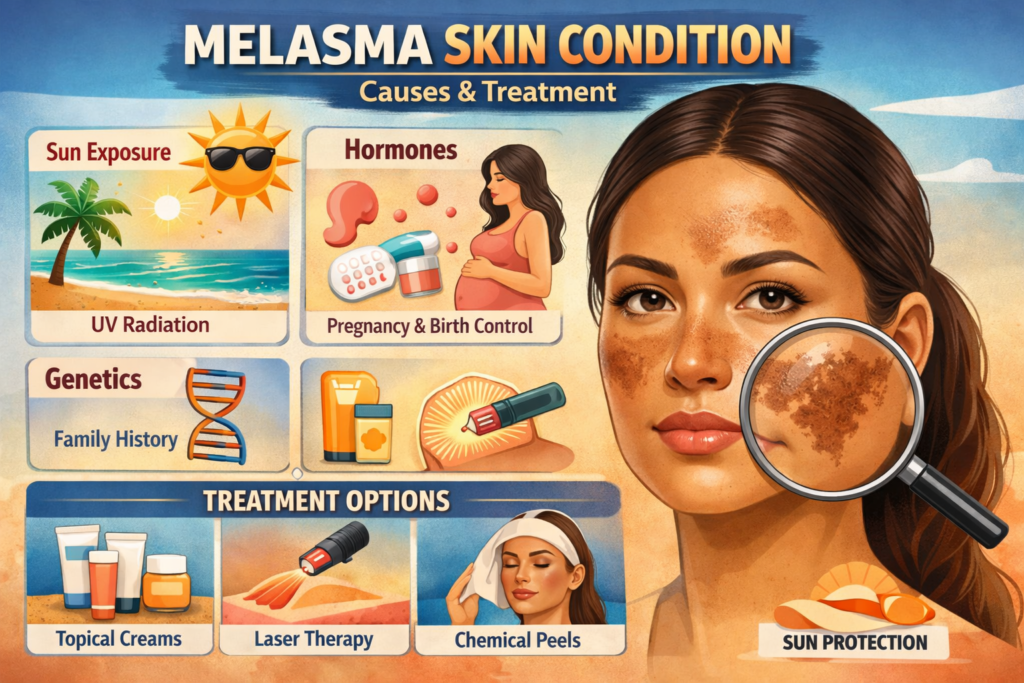
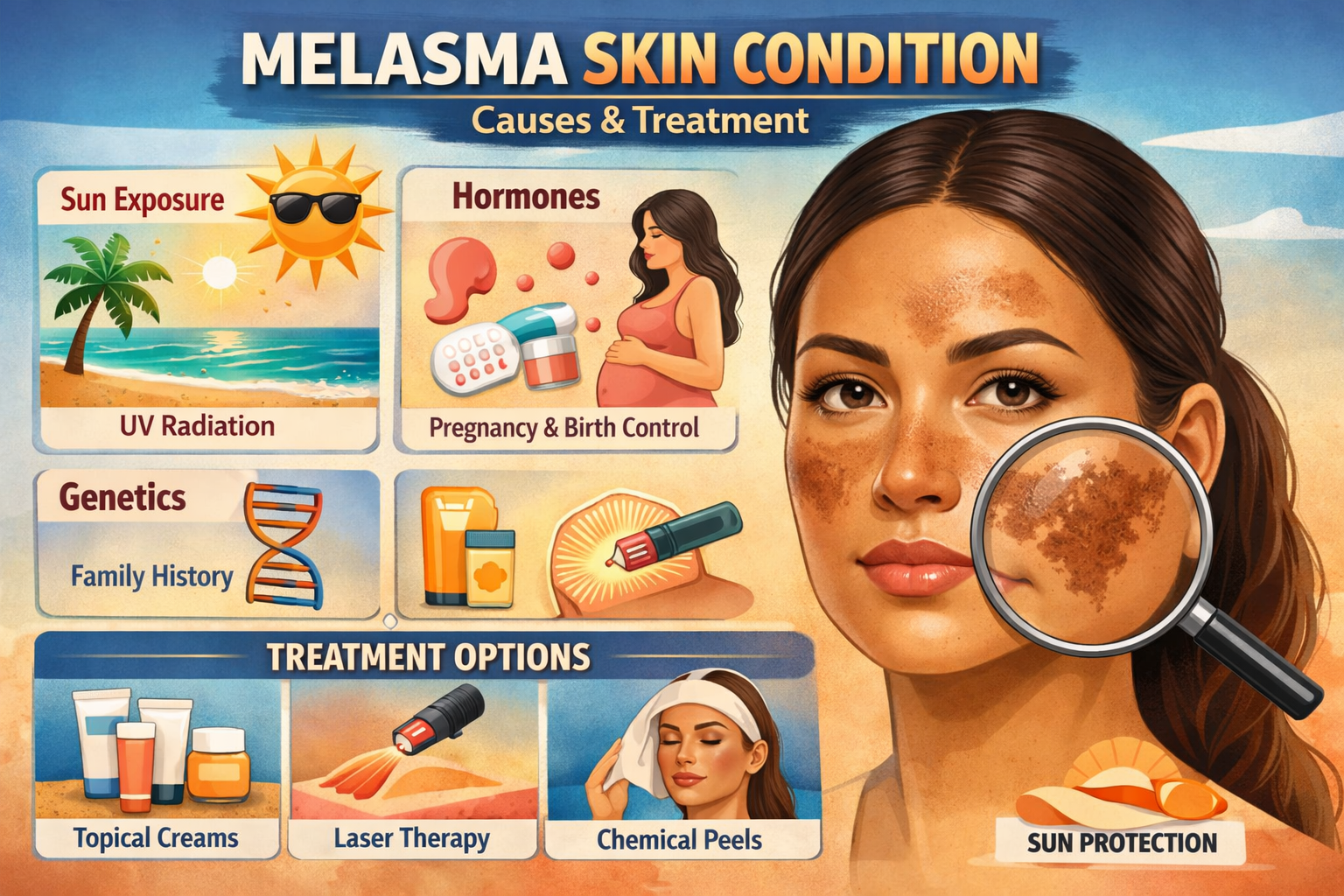
The condition is characterized by brown, grey or tan patches that usually appear on areas exposed to sunlight such as the cheeks, forehead, nose, chin and upper lip. Melasma is sometimes referred to as the “mask of pregnancy” because it frequently occurs during pregnancy due to hormonal changes.
Understanding what causes melasma, how it develops and the available treatment options can help individuals manage the condition effectively and prevent it from worsening.
What Is Melasma?
Melasma is a form of hyperpigmentation, a skin condition in which certain areas of the skin produce excess melanin. Melanin is the pigment responsible for skin colour. When melanin production becomes overactive in specific areas, the skin develops darker patches.
Unlike freckles or sunspots, melasma usually appears in symmetrical patterns on the face. The discoloration may develop gradually and can become darker with sun exposure. Although the condition is harmless from a medical standpoint, many people seek treatment because of its visible appearance.
According to dermatology research, melasma affects women far more frequently than men. It is estimated that nearly 90 percent of melasma cases occur in women, particularly during reproductive years.
Common Areas Where Melasma Appears
Melasma most commonly develops on areas of the skin that receive significant sunlight. These areas include:
- Cheeks
- Forehead
- Bridge of the nose
- Upper lip
- Chin
- Jawline
In some cases, melasma can also appear on the neck or forearms, especially in individuals who experience prolonged sun exposure.
What Causes Melasma?
The exact cause of melasma is not fully understood, but several factors are known to trigger or worsen the condition. Most experts believe melasma develops when pigment-producing cells in the skin become overactive.
1. Sun Exposure
Ultraviolet radiation from the sun is the most common trigger of melasma. Sunlight stimulates melanocytes, the cells that produce melanin, leading to darker skin patches.
Even small amounts of sun exposure can worsen melasma, which is why sun protection is one of the most important steps in managing the condition.
2. Hormonal Changes
Hormonal fluctuations play a major role in the development of melasma. The condition frequently occurs during pregnancy, which is why it is sometimes called the “pregnancy mask”.
Hormonal medications such as birth control pills or hormone therapy can also trigger melasma in some individuals.
3. Genetics
Genetic factors may increase the likelihood of developing melasma. People with a family history of the condition may be more likely to experience it themselves.
4. Skin Type
Melasma occurs more often in people with medium to dark skin tones. These individuals have more active melanocytes, which makes them more susceptible to hyperpigmentation.
5. Certain Medications and Cosmetics
Some medications and skincare products may increase sensitivity to sunlight, which can contribute to melasma. Irritating cosmetic products may also trigger inflammation that leads to pigmentation changes.
Symptoms of Melasma
The main symptom of melasma is the appearance of dark patches on the skin. These patches usually have well-defined borders and appear symmetrical on both sides of the face.
Unlike many skin conditions, melasma does not typically cause itching, pain or discomfort. The condition is mainly a cosmetic concern.
The color of the patches may vary depending on skin tone. They can appear:
- Light brown
- Dark brown
- Greyish brown
The intensity of melasma may change over time, often becoming darker during the summer months due to increased sun exposure.
Types of Melasma
Dermatologists classify melasma into three main types depending on where the pigment is located in the skin.
Epidermal Melasma
This type occurs in the outer layer of the skin. The patches tend to have clear borders and may respond well to treatment.
Dermal Melasma
Dermal melasma occurs deeper in the skin and often appears as bluish or greyish patches. This type may be more difficult to treat.
Mixed Melasma
Mixed melasma is the most common form and involves both superficial and deeper pigmentation.
Who Is Most at Risk?
Although anyone can develop melasma, certain factors increase the likelihood of experiencing the condition.
- Women between the ages of 20 and 40
- Pregnant women
- Individuals with darker skin tones
- People living in sunny climates
- Individuals with family history of hyperpigmentation
How Is Melasma Diagnosed?
Melasma is usually diagnosed through a visual examination by a dermatologist. In some cases, doctors may use a special light called a Wood’s lamp to determine how deep the pigment is in the skin.
This helps guide treatment decisions and determine whether the pigmentation is epidermal, dermal or mixed.
Treatment Options for Melasma
While melasma can be stubborn, several treatments may help lighten the dark patches and improve the overall appearance of the skin.
Topical Creams
Doctors may prescribe creams that contain ingredients such as hydroquinone, tretinoin or corticosteroids. These medications work by reducing melanin production and promoting skin renewal.
Chemical Peels
Chemical peels use special solutions to remove the outer layers of skin, helping reduce pigmentation over time.
Laser Treatments
Laser therapy may be used in some cases to target excess pigment. However, this treatment must be performed carefully to avoid worsening pigmentation.
Sun Protection
Using sunscreen daily is essential for managing melasma. Dermatologists recommend broad-spectrum sunscreen with SPF 30 or higher to protect the skin from ultraviolet radiation.
Prevention Tips
Preventing melasma often involves protecting the skin from triggers such as sun exposure.
- Apply sunscreen every day
- Wear wide-brimmed hats outdoors
- Avoid prolonged sun exposure
- Use gentle skincare products
- Consult a dermatologist before trying strong treatments
When to See a Doctor
Although melasma is harmless, individuals should consider seeing a dermatologist if dark patches appear suddenly or become more noticeable over time. Professional evaluation can confirm the diagnosis and recommend appropriate treatment options.
Living With Melasma
Living with melasma can be challenging for many people because the condition affects visible areas of the face. However, it is important to remember that melasma is extremely common and manageable with proper care.
With consistent sun protection, appropriate skincare and medical treatment when necessary, many individuals are able to control the appearance of melasma and maintain healthy skin.
Frequently Asked Questions
Is melasma permanent?
Melasma can fade over time, especially when triggers such as hormonal changes or sun exposure are controlled. However, the condition may return if the skin is exposed to strong sunlight.
Can men develop melasma?
Yes. Although melasma is more common in women, men can also develop the condition.
Does melasma go away after pregnancy?
In many cases, pregnancy-related melasma fades after childbirth, but some women may continue to experience pigmentation changes.
Can sunscreen prevent melasma?
Daily sunscreen use is one of the most effective ways to prevent melasma from worsening.
Conclusion
Melasma is a common skin condition that causes dark patches on the face due to excess melanin production. Although it is not harmful, the condition can affect confidence and may require long-term management.
Understanding the causes, recognizing the symptoms and following effective treatment strategies can help individuals manage melasma and protect their skin from further discoloration.
For more dermatology and medical awareness articles, visit the Health section on ZA Reports where we publish updates on common skin conditions and public health information.