
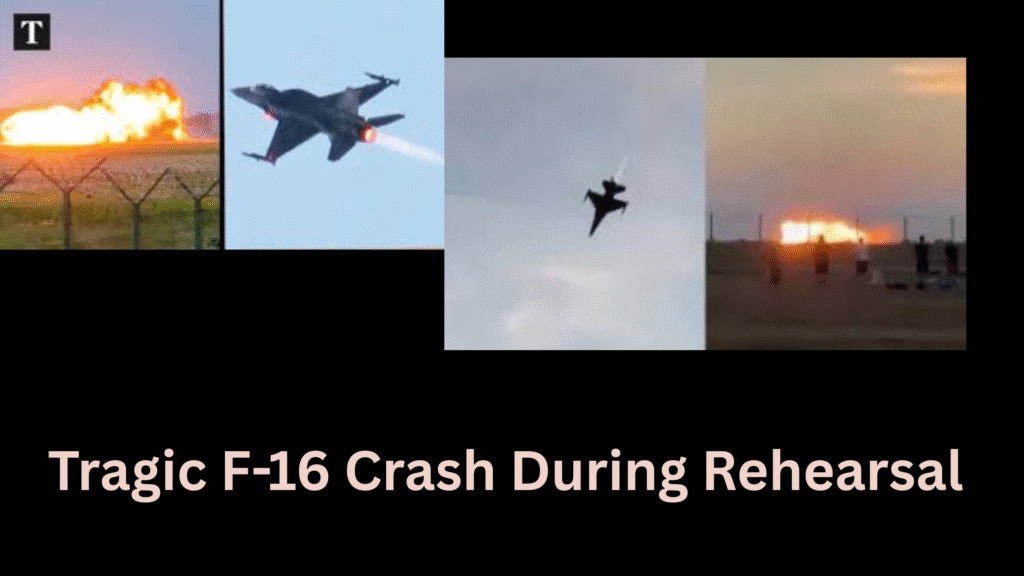
Tragic F-16 Crash During Radom Airshow Rehearsal Claims Life of Pilot
F-16 Crash
A somber incident occurred on August 28, 2025, when a Polish Air Force F-16C fighter jet crashed during a rehearsal for the Radom Air Show in central Poland. The crash tragically claimed the life of Major Maciej “SLAB” Krakowian, the leader of the elite Tiger Demo Team. This event has sent shockwaves through the Polish military, aviation enthusiasts, and the international community. The accident has also prompted concerns over the safety of high-performance aerobatic demonstrations.
In this article, we examine the circumstances surrounding the crash, the background of the pilot and the Tiger Demo Team, the immediate consequences, and the broader implications for military aviation safety.
The F-16 Crash: What Happened
During the afternoon rehearsal at Radom Air Base, the F-16 was performing an aerobatic maneuver when it lost control and collided with the runway. Eyewitnesses reported seeing the jet execute a complex maneuver—likely a barrel roll or loop-the-loop—before descending sharply and exploding on impact.
Emergency services responded promptly, but unfortunately, Major Krakowian did not survive. Authorities confirmed that no bystanders were injured in the incident. Videos circulating on social media show the aircraft in a steep dive, with no visible signs of ejection.
The Radom Air Show, which was scheduled to take place in the following days, has been officially cancelled as a result of this tragedy.
About the Pilot: Major Maciej “SLAB” Krakowian
Major Krakowian was one of Poland’s most decorated pilots. Known for his exceptional skill and leadership, he led the Tiger Demo Team, a squad of F-16 pilots responsible for high-profile aerobatic displays. He was admired both within the Polish Air Force and internationally for his technical expertise and precision flying.
Colleagues described him as a dedicated instructor, mentor, and consummate professional. His death represents a significant loss for the Polish military aviation community.
The Tiger Demo Team: Excellence in Aerobatics
The Tiger Demo Team is Poland’s premier aerobatic unit, performing at airshows across Europe. Comprised of highly trained F-16 pilots, the team demonstrates precision flying, complex maneuvers, and the capabilities of the aircraft.
Aerobatic teams like the Tiger Demo Team often operate under strict safety protocols. Despite these measures, high-speed maneuvers at low altitudes inherently carry risks. Even minor miscalculations can have catastrophic consequences.
Factors Contributing to F-16 Crash
While the exact cause of this crash is still under investigation, several factors typically contribute to accidents during aerobatic displays:
- High-G maneuvers – Rapid changes in speed and direction can induce physical strain and challenge aircraft stability.
- Mechanical failure – Engine issues, control system malfunctions, or structural fatigue can compromise safety.
- Pilot error – Even experienced pilots are susceptible to misjudgments during complex maneuvers.
- Environmental conditions – Wind gusts, weather changes, or visibility issues can affect performance.
Investigators will analyze flight data, maintenance logs, and eyewitness accounts to determine the precise sequence of events.
Response from Authorities about F-16 Crash
Polish officials, including Defence Minister Władysław Kosiniak-Kamysz and Prime Minister Donald Tusk, expressed their condolences. The government described Major Krakowian’s death as a “great loss for the Air Force and the entire Polish military.”
Emergency response teams secured the crash site, while authorities began a formal investigation to determine whether the crash was caused by mechanical failure, pilot error, or other factors. NATO allies have also expressed concern regarding the safety of high-performance demonstrations, especially for frontline aircraft like the F-16.
Implications for Military Aviation Safety
This incident highlights the inherent risks associated with aerobatic displays and high-performance fighter jets. It underscores the importance of:
- Rigorous maintenance and pre-flight checks
- Continuous pilot training and simulation exercises
- Strict safety protocols during low-altitude maneuvers
- Enhanced emergency ejection systems
Military aviation authorities worldwide often review accidents like this to refine training programs, prevent similar incidents, and enhance the safety of pilots.
International Reaction
The F-16 crash has drawn attention from aviation communities across Europe and NATO member countries. Airshow organizers and military authorities are reassessing safety measures to prevent similar accidents. The tragedy serves as a sobering reminder of the risks faced by military pilots, even those with extensive experience.
Social media platforms have seen an outpouring of grief and support for Major Krakowian and his family. Videos of the crash and tributes to the pilot have gone viral, highlighting the global impact of this incident.
Lessons Learned and Moving Forward
While the investigation is ongoing, there are several key takeaways from this tragedy:
- Safety should remain paramount: Airshows are thrilling, but high-risk maneuvers must balance entertainment with pilot safety.
- Continuous training is essential: Even elite pilots need ongoing simulation and scenario-based preparation.
- Transparency and accountability: Military authorities must ensure that crash investigations are thorough and publicly communicated to maintain trust.
Major Krakowian’s legacy will continue through the training and mentorship he provided to younger pilots, and through improvements in safety procedures inspired by lessons learned.
The F-16 crash during the Radom Air Show rehearsal is a stark reminder of the dangers inherent in military aviation. Major Maciej “SLAB” Krakowian’s death is a profound loss to the Polish Air Force and the international aviation community.
As investigations continue, this tragedy will likely influence safety protocols for aerobatic displays worldwide. While we mourn the loss of a remarkable pilot, the lessons learned will help prevent similar accidents in the future, honoring his legacy through safer skies for all military aviators.